
Reliably signalling a startling husbandry event improves welfare of zoo-housed capuchins (Sapajus apella)
Kristina Rimpley and Prof Hannah Buchanan-Smith of Stirling University examined the effect of giving the capuchins a reliable signal (a knock on the door) 3 seconds prior to a keeper entering the enclosure to perform a husbandry event. The study hypothesised two main things;
1. That unreliable signals that indicate husbandry events may have a negative impact on capuchin behaviour.
2. Making a husbandry event predictable will decrease anxiety related behaviours prior to the husbandry event.
To address these hypotheses the researchers studied 12 of the capuchins at Living Links, 6 from the West and 6 from the East. Behaviours that were used as indicators for anxiety levels were scratch, vigilance and jerky motion.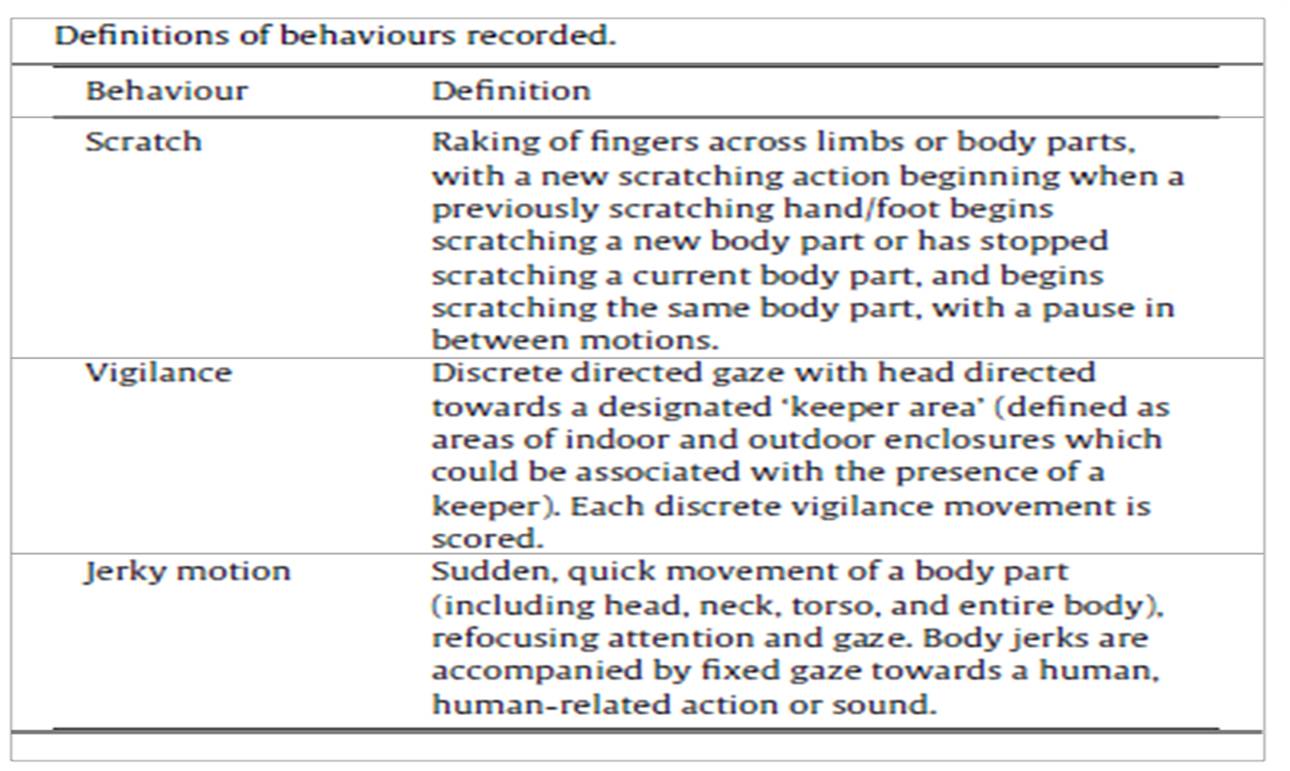
Baseline information was gathered on the monkeys’ behaviour 5 minutes before and after door events, with a door event being defined as the opening and/or closing of any door in the keeper area which could be heard by the capuchins.

As you will see in the figure above there are many doors in the keeper area and they may be opened or closed for a variety of reasons. Thus hearing a door could not predictably signal a keeper would enter a capuchin enclosure. In fact only 30% of door events resulted in a keeper entering a capuchin enclosure.
Therefore the researchers implemented the treatment of the door knock 3 seconds prior to a husbandry event to allow the capuchins a predictable indicator that a keeper was about to enter. The capuchins were given 2 weeks to get used to knocking as a signal then observed again to see if their anxiety levels had changed towards door events.
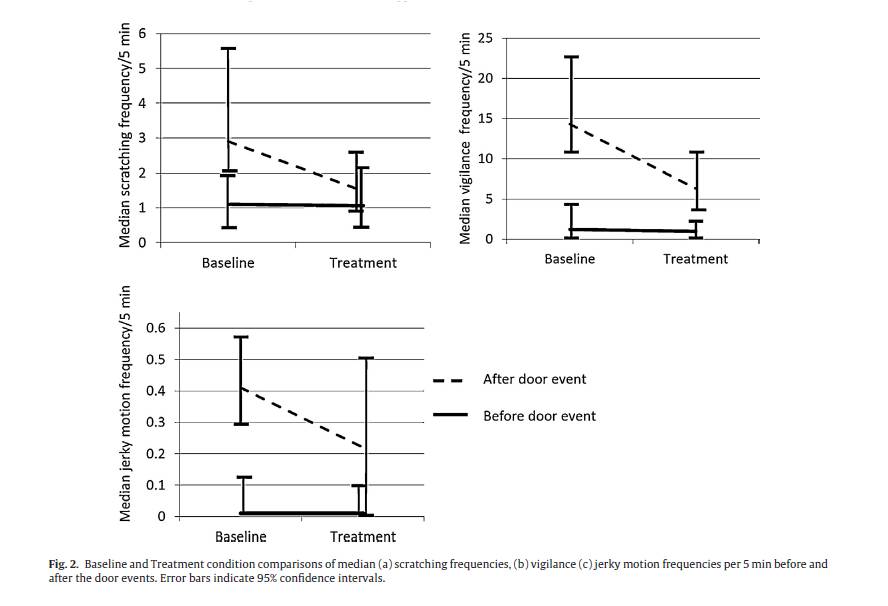
The results indicate that there was a decrease in anxiety related behaviours of the capuchins in the after door event in the treatment phase, thus supporting the notion that giving the animals a predictable indicator of events can benefit the overall welfare of the monkeys.
This is a great technique that can be implemented very easily for no cost and no additional time and can have a great benefit to all our monkeys’ well being.
Reference
Rimpley, K and Buchanan-Smith, H (2013). Reliably signalling a startling husbandry event improves welfare of zoo-housed capuchins (Sapajus apella). Applied Animal Behaviour Science. 147, 205-213.